Symphony Concert N° 8
Palm Sunday Concert




gespielte Werke
Richard Strauss
- »Metamorphosen«
Ludwig van Beethoven
- Symphony No. 9 in d minor, Opus 125
Mitwirkende
- Daniele Gatti Conductor
- Sara Blanch Soprano
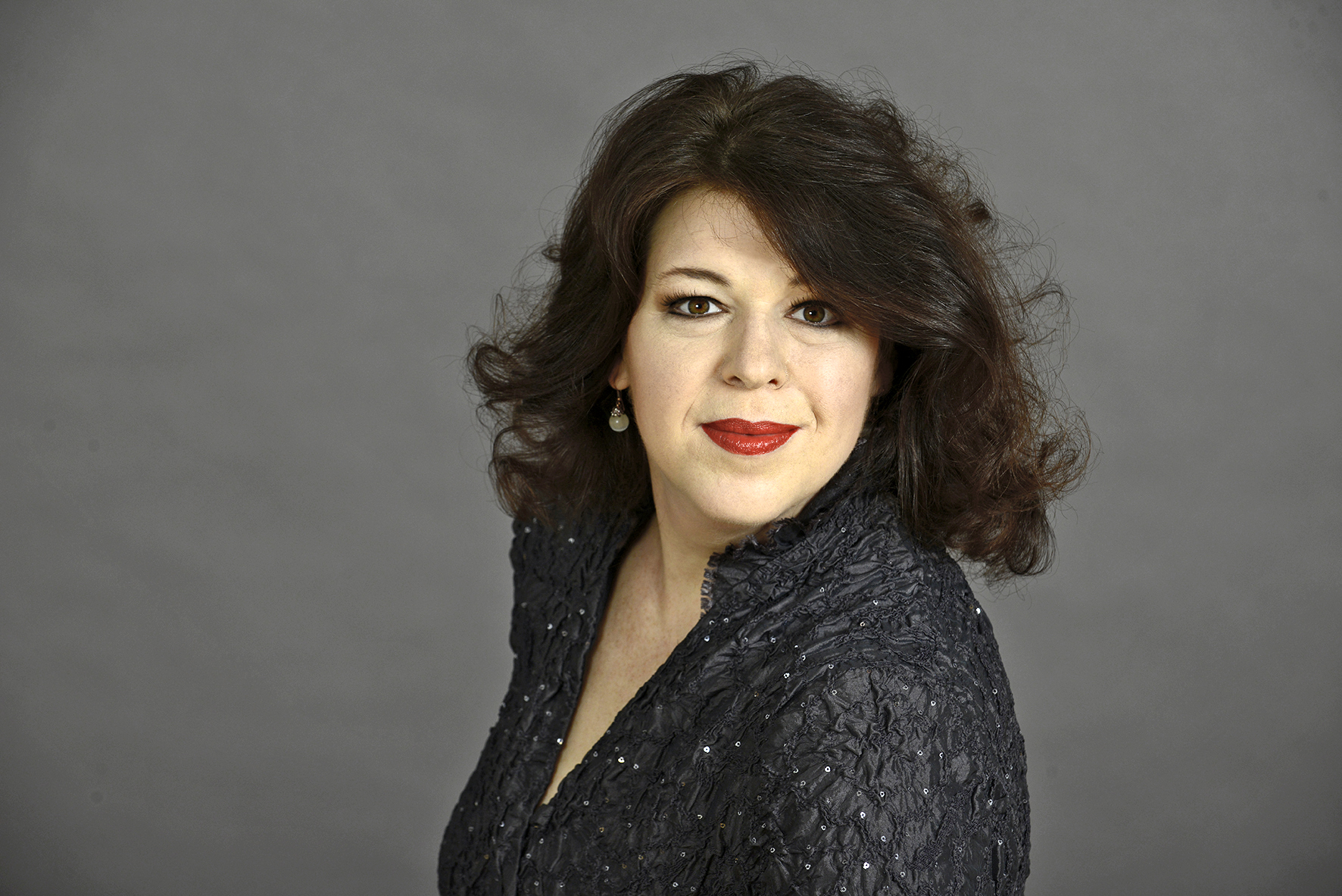
- Christa Mayer Alto
- Bernard Richter Tenor
- Georg Zeppenfeld Bass
- State Opera Chorus Dresden
Dresden’s traditional Palm Sunday benefit concert is steeped in history. In 1846, and again during the revolutionary year of 1849, Richard Wagner conducted Ludwig van Beethoven’s Ninth Symphony in his capacity as Hofkapellmeister. Yet the work’s local history stretches back even further, to its Dresden premiere in 1838 at the Royal Palace in the city’s Grosser Garten park. The current programme strikes a balance between mourning and optimism: Richard Strauss’s »Metamorphosen« – composed in 1945 as Europe’s cultural capitals lay in ruins – serves as a haunting lament for a vanished world. In contrast, Beethoven’s Ninth, with its setting of Schiller’s »Ode to Joy«, offers a vision of humanity and reconciliation.
Ludwig van Beethoven:
Sinfonie Nr. 9»Es ist der Beginn des vierten Satzes, der Celli und Bässen eine besondere Aufgabe gibt. Die 45 Minuten zuvor erscheinen mir wie ein Gebirge, dessen schroffe Spitzen über die Wolken ragen – große Schönheit neben rauen Felsen. Doch nach einem so unvermittelten wie heftigen Ausbruch beginnt das Rezitativ, dessen Motiv alles verändert, wenn Celli und Bässe spielen, als wären sie eine Stimme, die in einen Dialog mit allem eintritt, was zuvor gewesen ist und welches in die berühmte Melodie mündet, die wahrscheinlich jeder mitsingen kann.«
Matthias Wilde
Cellist
Daniele Gatti
Daniele Gatti has been Principal Conductor of the Staatskapelle Dresden since the 2024/25 season. He made his debut with the orchestra in February 2000 at the invitation of the then Principal Conductor, Giuseppe Sinopoli, with a programme featuring works by Mendelssohn, Hindemith and Brahms. Over the following years, the Italian maestro returned several times to Dresden. Gatti’s mastery of the Staatskapelle’s core repertoire, his visionary interpretations and keen sense of the sound and unique traditions of this historic ensemble are an assurance of outstanding concert experiences. In addition to his post in Dresden, Daniele Gatti is also the Music Director of the Teatro del Maggio Musicale Fiorentino, where he was Principal Conductor from 2022 to 2024.
In his third season, he continues the Staatskapelle’s first complete Mahler cycle with »Abschied« (»Farewell«). In 2026/27, he conducts the opening concert of the Staatskapelle Dresden and inaugurates the new season of the Semperoper with »Un ballo in maschera«, where he is also expected to return later for »Parsifal«. Still at the helm of the Staatskapelle, he undertakes three European tours; the third, in 2027 the year marking the bicentenary of Beethoven’s death sees him engaged in the complete performance of the c omposer’s nine symphonies. At the Maggio Musicale Fiorentino, he will instead take the podium to conduct three operas »Il trovatore«, »Elektra«, and »Don Giovanni« as well as a series of symphonic engagements, including the beginning of a cycle devoted to Bruckner.
Born in Milan in 1961, Daniele Gatti studied composition and orchestral conducting at the Conservatorio Giuseppe Verdi in his home city. This was followed by his first permanent appointments with major musical institutions such as the Accad emia Nazionale di Santa Cecilia, the Royal Philharmonic Orchestra, the Orchestre National de France, the Royal Opera House in London, the Teatro Comunale di Bologna, Zurich Opera House and the Royal Concertgebouw Orchestra in Amsterdam. He continues to app ear regularly as a guest conductor with orchestras including the Berlin Philharmonic and the Vienna Philharmonic. Daniele Gatti has been awarded the »Franco Abbiati« Prize by Italian music critics as Best Conductor on three occasions. In 2016, he was app ointed Che valier de la Légion d’honneur by the French Republic for his work as Music Director of the Orchestre National de France. In his native Italy, he has also received the honorary title of »Grand Officer of the Order of Merit«.
Since 2016, he has he ld a professorship in conducting at the Accademia Musicale Chigiana in Siena.
Sara Blanch
Born in Darmós (Tarragona), she studied at the Liceu Conservatory in Barcelona and currently receives advice of the soprano Mariella Devia.
She has been awarded in different competitions, among others the Montserrat Caballé, Mirabent i Magrans and Tenor Viñas 2016.
Among her future engagements: Médée at Teatro Real in Madrid, Le comte Ory in Bologna, Die Zauberflöte at the Wiener Staatsoper, Don Pasquale at the Royal Opera House in Muscat, Messiah at the Accademia di Santa Cecilia in Rome, Les Pêcheurs de perles in Cologne and L’Orontea at Teatro alla Scala in Milan.
After her successful debut in Barcelona with Lisistrata, by Albert Carbonell, she performed Britten's Little Sweep, Rita by Donizett and Orfeo ed Euridice, Un ballo in Maschera, La serva padrona, La cambiale di matrimonio and L’occasione fa il ladro in different Spanish theatres.
In 2013 she debuted at the Rossini Festival of Pesaro, performing the role of Folleville (Il Viaggio a Reims). In the same year she sang the role of the Queen of the Night (The Magic Flute) in Sabadell. She debuted at the Rossini in Wildbad Opera Festival in 2015 as Elvira (L'italiana in Algeri) and Aurelia in Lindpaintner’s Il Vespro siciliano, and came back in 2016 with Le Comte Ory and 2018 with Matilde di Shabran.
During her career she has debuted at the Teatro de la Maestranza in Seville and Teatro Verdi in Salerno (The Magic Flute), Gran Teatre del Liceu in Barcelona (Thaïs, L’italiana in Algeri and L’enigma de Lea), Teatro de la Zarzuela (Châteux Margaux / La viejecita), Teatro Real Madrid (The golden Cockerl, Thaïs), Teatro Campoamor in Oviedo (L'elisir d'amore and Il Turco in Italia), Peralada Festival (Thaïs) and Teatre Principal in Palma de Mallorca (L’elisir d’amore).
Recent commitments include: Aureliano in Palmira at the Rossini Opera Festival in Pesaro, Lucia de Lammermoor in Oviedo and Palermo, Don Pasquale in Sevilla, Policías y ladrones at the Teatro de la Zarzuela, La clemenza di Tito at the Liceo, Don Giovanni in Perm, Adina and La scala di seta at Rossini in Wildbad Festival, Un ballo in maschera in Madrid and Barcelona, La fille du régiment at the Donizetti Festival in Bergamo, Falstaff in Valencia, L’elisir d’amore in Mallorca, Ariadne auf Naxos in Barcelona and Florence under Daniele Gatti, La Bohème in Rome, Il turco in Italia in Madrid, Lo sposo di tre e marito di nessuna, Orphée et Euridice and The Rake’s progress under Daniele Gatti in Florence, Die Zauberflöte at the Wiener Staatsoper as well as several concerts and recitals in France, Italy and Spain.
Christa Mayer
Christa Mayer studied at the University of Music and Theatre in Munich. She attended the class of Lied interpretation with Helmut Deutsch and the opera course, taking part in performances at the Prinzregententheater Munich, and graduated with 1st class honours.
She was a prize winner in several competitions, such as the ARD International Music Competition 2000. Moreover, she has been awarded the Richard-Strauss-Medal – the Young Talent Prize of the Richard Strauss Society – and the Bavarian State’s Prize for Young Artists.
In 2001/2002 season Christa Mayer joined the ensemble of the Saxon State Opera in Dresden, where she has been performing Erda in »Das Rheingold« and »Siegfried«, Fenena in »Nabucco«, Suzuki in »Madama Butterfly« with Fabio Luisi, Quickly in Verdi’s »Falstaff« with Daniele Gatti, Baba in »The Rake’s progress«, Adelaide in »Arabella« with Peter Schneider.
She was engaged at the Deutsche Oper Berlin and at the Bavarian Staatsoper Munich as well as at the Teatro di Maggio musicale Florence and the Teatro La Fenice Venice.
In 2006 she performed (»Rheingold«) in the »Ring«-Cycle at the Semperoper Dresden under the baton of Fabio Luisi, and she debuted as Waltraute in »Götterdämmerung«. In 2007 she took part in the »Ring«-Cycle in Valencia and Florence (M° Zubin Mehta) as Erda (»Rheingold«).
Christa Mayer is even an internationally acclaimed concert singer: Bach »Weihnachtsoratorium« – Helmuth Rilling, »Mozart-Requiem« – Barcelona Palau de la Musica, Beethoven »Missa C-Dur« – Lissabon Teatro San Carlo; Beethoven »9th Symphony« – Bamberger Symphoniker, Bach »h-moll-Messe« – Kreuzkirche, Dresden; Händel- »Messiah« – Konzerthaus Berlin and Mahler-»Kindertotenlieder«, September Musical Montreux. Glanert »Requiem for Bosch« with BBC London, »Gurrelieder« with Thielemann in Dresden.
Following her CD Recital Debut with songs of Hermann Zilcher at Orfeo International, the artist performed at the Schubertiade Schwarzenberg, the Bad Kissingen Summer Festival and the Schleswig-Holstein Music Festival.
In Summer 2008 Christa Mayer made her debut at the Bayreuth Festival – as Erda and Waltraute, followed by the re-invitation for 2009 and 2010, even as Mary in »Der fliegende Holländer«. Her interpretation of Brigitta in »Die tote Stadt« at the Venice Fenice turned out to be a much acclaimed success.
In Dresden she sang Cornelia in Handel’s »Giulio Cesare«, Gaea in Dresden’s new production »Daphne«, Didon in »Les Troyens« and Erda/Waltraute in »Ring«. As Cornelia she was even invited to Düsseldorf, at the Hamburg State Opera she sang Quickly (»Falstaff«) and Erda.
Her Brangäne in »Tristan«, new production, at the Bayreuth Festival received high international acclaim. The New National Theatre Tokyo invited Christa Mayer as Erda (»Rheingold«/»Siegfried«). In Salzburg Christa Mayer sang Emilia (»Otello«), the mezzo part in »Missa solemnis« and Fricka (»Walküre«) under Christian Thielemann.
The Saxon State Opera of Dresden honoured Christa Mayer for her artistic achievements and awarded her the prestigious title of »Kammersängerin«. The Bavarian State awarded Christa Mayer the »Bayerischer Kulturpreis«.
Georg Zeppenfeld
Bass Georg Zeppenfeld, born in Westphalia, studied singing at the Cologne University of Music. Engagements have taken him to the great opera houses of Munich, Berlin, Hamburg, Vienna, Milan, Paris, Barcelona, Lyon, Antwerp, the Bayreuth Festival, the Lyric Opera of Chicago, the Metropolitan Opera New York and San Francisco. In 2002 he made his first guest appearance at the Salzburg Festival, where he sang Sarastro (»The Magic Flute«) under Nikolaus Harnoncourt in 2012, and King Karl in Schubert's »Fierrabras« in 2014. From 2001 to 2005 Georg Zeppenfeld was an ensemble member of the Semperoper Dresden. Here he appeared in roles such as Figaro and Bartolo (»Le nozze di Figaro«), King Filippo II. (»Don Carlo«), Zaccaria (»Nabucco«), Banco (»Macbeth«), Eremit and Kaspar (»Der Freischütz«), König (»Aida«), Sarastro (»The Magic Flute«), Colline (»La bohème«), Alidoro (»La cenerentola«), Fasolt (»Das Rheingold«), Landgrave Hermann (»Tannhäuser«), King Marke (»Tristan and Isolde«), Gharib (»L'Upupa and the Triumph of Son Love«), Aquarius (»Rusalka«), Peneios (»Daphne«), Seneca (»L'incoronazione di Poppea«), Sparafucile (»Rigoletto«), Henry the Bird (»Lohengrin«) and Rocco (»Fidelio«). In 2013 he made his debut as Daland in the new production of »The Flying Dutchman« alongside »Orlando«. In the 2013/14 season he sang the role of Don Alfonso in Andreas Kriegenburg's new production of »Così fan tutte«. Under Cornelius Meister, Georg Zeppenfeld was a guest at the Royal Opera House Covent Garden in London in 2015 as Sarastro. In 2016 he sang the part of Lodovico in »Otello« at the Salzburg Easter Festival, and in 2017 he will appear there as Hunding in »Die Walküre«.
State Opera Chorus Dresden
Had it not been for Carl Maria von Weber, Dresden’s opera chorus would not have been founded, or at least not on October 8, 1817. It was Weber who obtained royal approval for this initiative; after all, it was his artistic mission (and personal ambition) to establish a German opera company alongside the tradition-steeped Italian opera. Besides suggesting other reforms for the staging of opera, he argued that it was now essential to have a regular choir. The choir started to participate in the traditional Palm Sunday concerts as early as 1827. Major landmarks in its history include the performances in 1846, 1847 and 1849 of Ludwig van Beethoven’s Ninth Symphony under the later Kapellmeister Richard Wagner, who was forced to flee Dresden shortly after the last-mentioned performance.
Currently comprising 89 singers, the Dresden State Opera Chorus has now become one of Europe’s finest opera choruses and has been acclaimed as such in virtually every premiere review in recent years. This preservation of tradition, coupled with a growing awareness of quality, is indebted to such artists as Joseph Metzner, Wilhelm Fischer, Karl Maria Pembaur, Ernst Hintze, Gerhart Wüstner, Franz Peter Müller-Sybel, Hans-Dieter Pflüger, Matthias Brauer and Pablo Assante, who have led the choir through difficult times to the present day. The Dresden State Opera Chorus is currently directed by Jörn Hinnerk Andresen, who since assuming his post in 2014 has maintained and developed such qualities as tonal coherence, refinement and reliably consistent precision.
